
2025-09-13
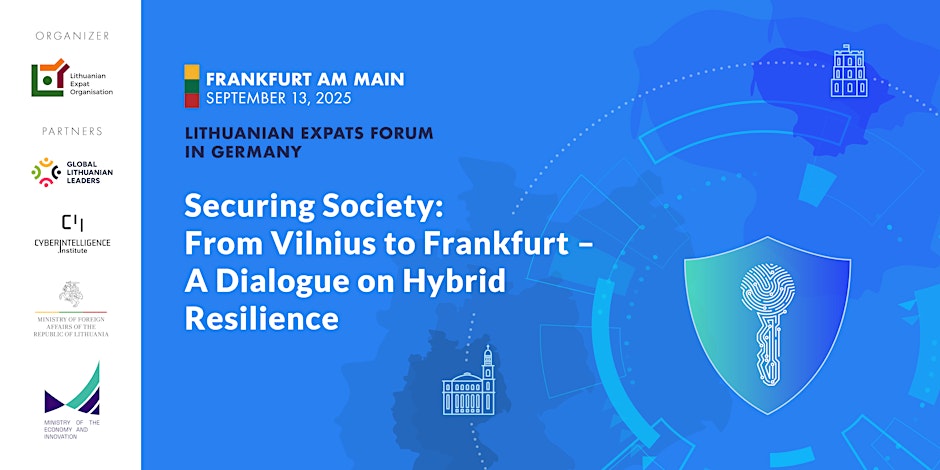
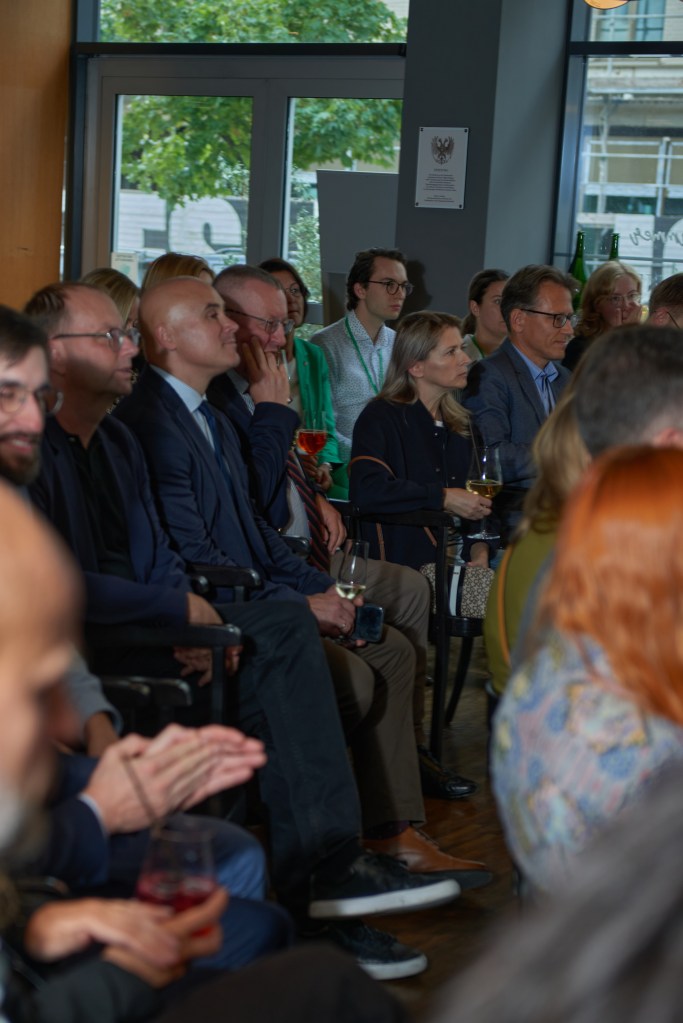
On the weekend of 13th-14th of September 2025, the 4th traditional Lithuanian Professionals Forum, titled “Securing Society: from VNO to FRA 2025 – A Dialogue on Hybrid Resilience”, brought together Lithuanian expats across Germany, as well as policymakers, experts, academics and business leaders from both Germany and Lithuania for a focused exchange on pressing geopolitical, digital and security challenges.
Organized by LEO in Berlin together with the Lithuanian expats’ network in Frankfurt am Main, in partnership with the Cyberintelligence.Institute and with support from Lithuania’s Ministries of Foreign Affairs and Economy & Innovation, the forum took place at the Mainhaus Stadthotel. For the first time, the event was hosted in Frankfurt rather than Berlin, reflecting an explicit intent to connect Lithuanian expats not only in the capital but across the whole of Germany. It was also the first edition that deliberately invited German policymakers and local stakeholders to foster a direct, bilateral dialogue on topics of shared strategic urgency. The event also reinforced the dual role of Lithuanian expats as cultural ambassadors and as agents of economic and technical exchange, illustrating how deeper ties between Germany and Lithuania can generate mutual benefit.
High-Level Political and Diplomatic Contributions
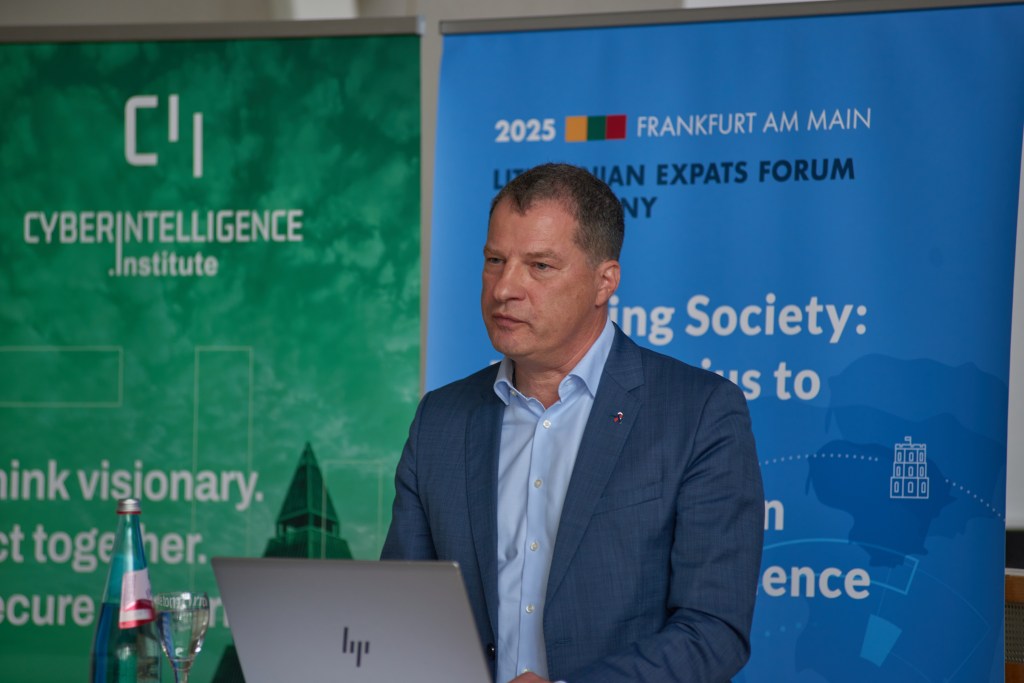
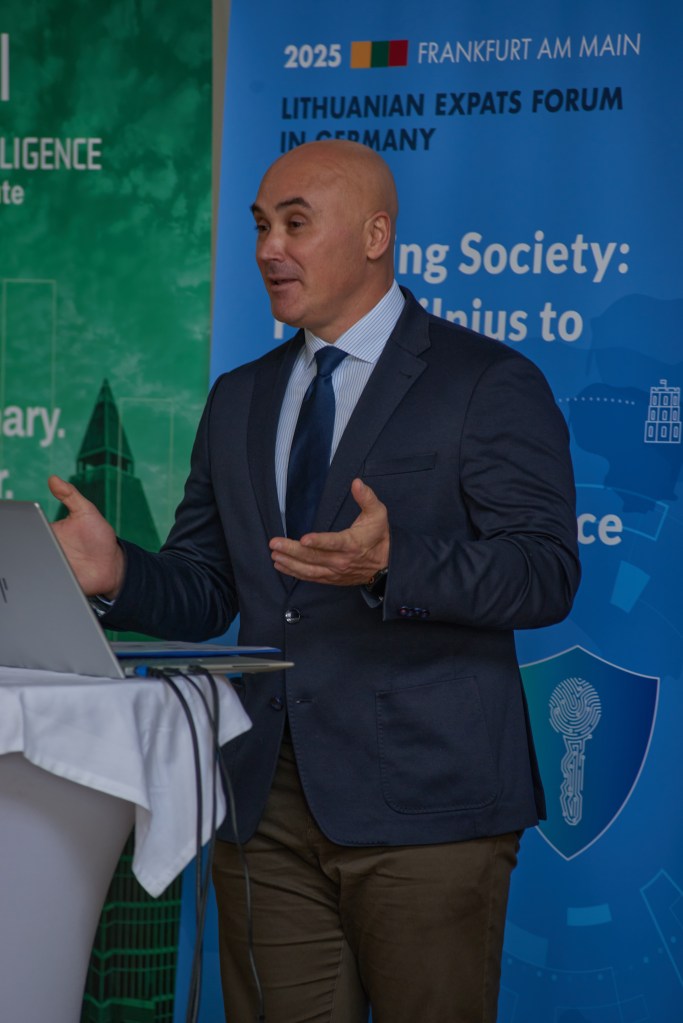
The conference opened with strong political and diplomatic contributions that underscored resilience as a strategic priority. Prof. Dr. Dennis-Kenji Kipker of the Cyber.Intelligence Institute moderated the program and framed the day by stressing the urgency of countering hybrid threats at governmental and societal levels. Tomas Grabauskas, Deputy Head of Mission at the Lithuanian Embassy in Germany, emphasized the diplomatic importance of close German-Lithuanian cooperation in the current geopolitical environment, while Rūta Landgrebe, President of LEO, highlighted the diaspora’s role in building networks and practical partnerships. A digital greeting from Anna Lührmann, Member of the German Bundestag, signalled political readiness in Germany to engage more closely with Lithuania on security and social cohesion. The moderated debate, “How to strengthen hybrid resilience – a German-Lithuanian perspective”, anchored the political conversation: chaired by Prof. Dr. Dennis-Kenji Kipker, the panel brought together Tomas Godliauskas, Vice-Minister of the Ministry of Defence of Lithuania, Ralf Stettner, Chief Information Security Officer at the Hessian Ministry of the Interior, and Dr. Christopher Nehring, Intelligence Director at the Cyber.Intelligence.Institute.
Societal and Practical Perspectives
Alongside high-level discussion, the forum gave substantial attention to societal and practical measures that strengthen resilience in every day life. Prof. Dr. Volker Wittpahl, Managing Director of the Institute for Innovation and Technology in Berlin and Affiliate Professor at Klaipėda University, addressed the risks posed by deepfakes, automated influence operations and AI-driven manipulation in business environments, explaining how innovation can be both a tool and a vulnerability. Practical, hands-on input came from Justina Stunžėnaitė, Senior Manager in Cyber Security Consulting at KPMG Germany, who led a workshop on human error as the weakest link in cybersecurity and showed how targeted awareness, training and process design reduce everyday risk. In parallel, Joanna Rusin-Rohrig, Country Director DACH & PL at NordSecurity, guided participants through pragmatic steps to balance convenience and security in daily digital life, from password hygiene to safer remote-work practices. Workshop summaries distilled concrete takeaways for individuals, SMEs and bigger organisations, and the day’s themes were brought together in a closing dialogue between Prof. Dr. Kipker and Rūta Landgrebe.
Awards and Cultural Program
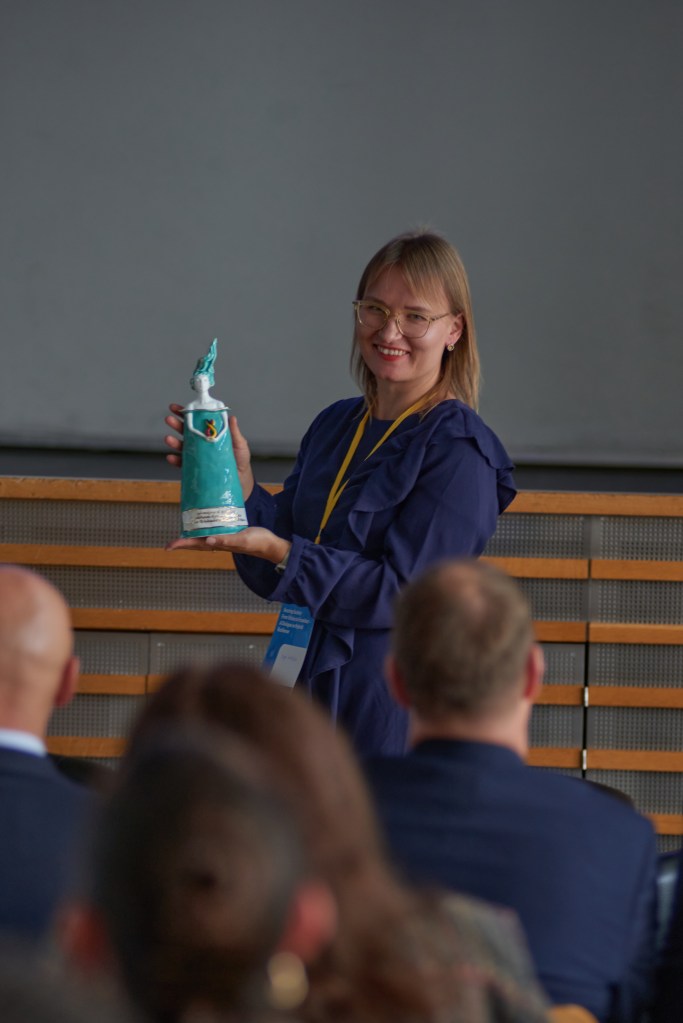
The forum concluded with an Award Ceremony dedicated to recognising outstanding contributions to the strengthening of German-Lithuanian economic relations. This year’s nominees were Benjamin Wittstock, Dalia Henke, Irma Petraitytė-Lukšienė, Gabrielė Gylytė-Hein, and Jūratė Keblytė – all long-standing contributors to professional networks, cultural exchange, and economic cooperation between the two countries.
The award was presented to Benjamin Wittstock, who served as Honorary Consul of Lithuania in Bavaria from 2011 to 2023. Among his many achievements, Wittstock played a pivotal role in the establishment of the Lithuanian Consulate General in Munich in 2023, a significant diplomatic step that he supported while stepping down from his honorary position. His work has substantially strengthened economic cooperation between Lithuania and Germany, advanced Lithuania’s image in Germany, and fostered innovation. Moreover, he has been instrumental in linking together networks of business, diplomacy, and professionals across both countries, creating a foundation for lasting collaboration.
The ceremony itself was enriched by a cultural program: a live piano performance by Guoda Gedvilaitė, who paid tribute to the Lithuanian composer M. K. Čiurlionis. This cultural dimension reminded participants that resilience is not only a political and technological undertaking but also deeply social and cultural – rooted in shared heritage, mutual recognition, and human bonds.
Reflection in the Current Geopolitical Context
In the current climate of intensified geopolitical tension and digitally enabled influence campaigns, this edition of the Lithuanian Expats Forum in Germany was more than symbolic. It functioned as an arena for strengthening social resilience, learning about mechanisms for disinformation and how to counter them by cultivating networked and informed communities, and as evidence that European security depends on cooperation that extends beyond traditional channels into diaspora networks, society, the private sector and academia. The Frankfurt meeting succeeded in bringing diverse communities together to confront complex threats, open new opportunities for partnership, and strengthen the German-Lithuanian dialogue of resilience, collaboration and innovation.




The project is partly funded by the Ministry of Foreign Affairs and the Ministry of the Economy and Innovation of the Republic of Lithuania / Projektas iš dalies finansuojamas Lietuvos Respublikos užsienio reikalų ministerijos ir Ekonomikos ir inovacijų ministerijos lėšomis.

 LEO in Berlin